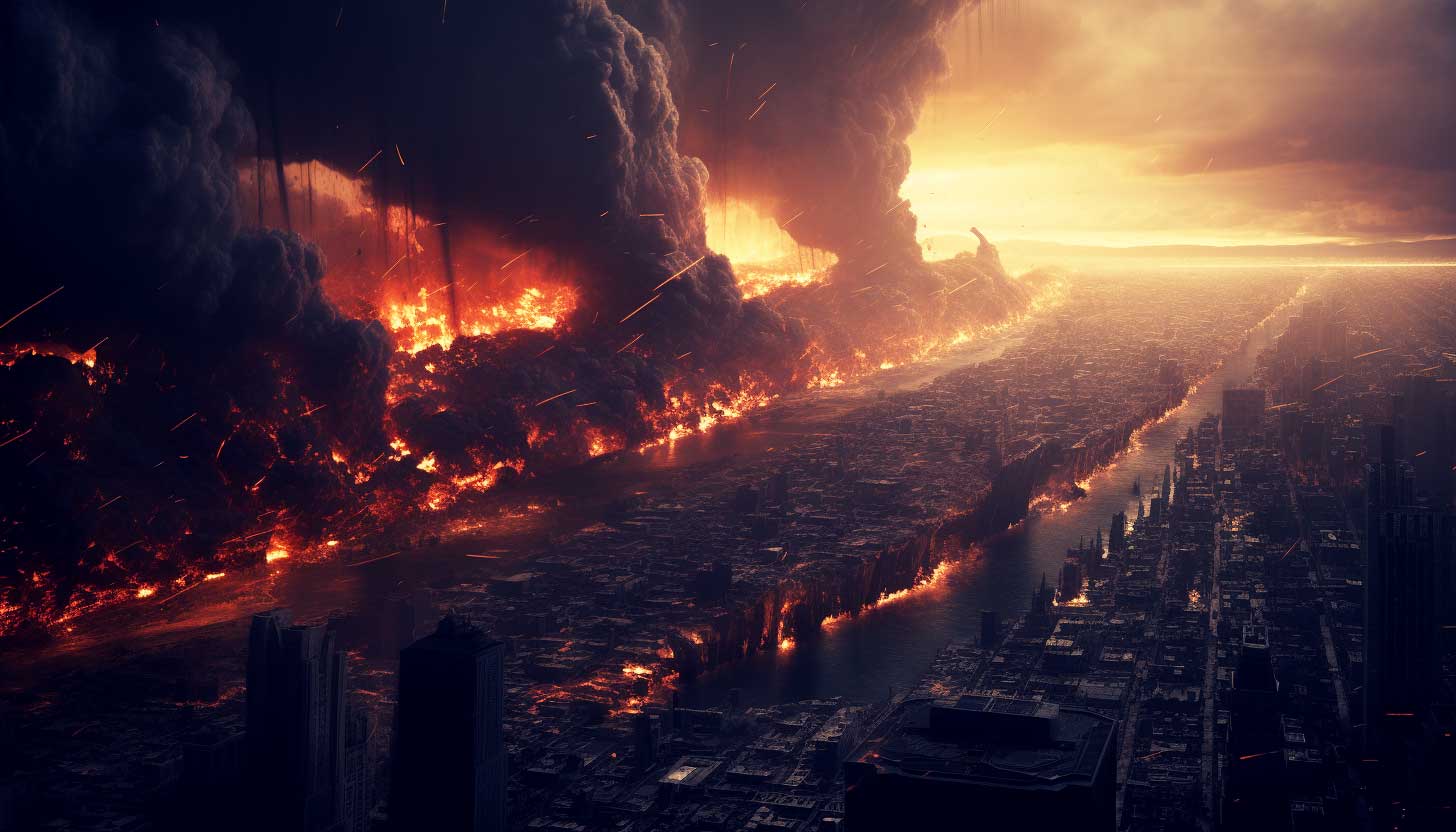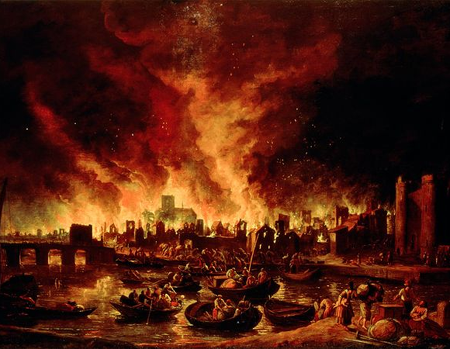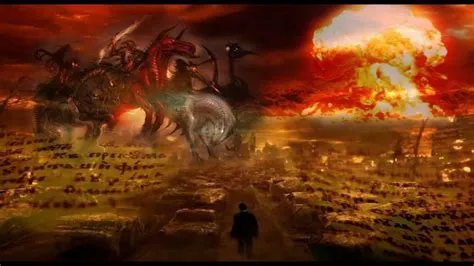

The Fire of End Times, Samvartaka fire (Saṃvartakāgni), Kal-Agni, Pralaya-Agni, Naimittika Agni, All consuming Fire, Yugantakagni (etc) refers to the mythological, all-consuming fire of cosmic destruction that annihilates the universe at the end of a kalpa (aeon) in various religions. It represents a devastating, purifying force, often described as a submarine fire or a cloud of intense energy, symbolizing ultimate destruction, the end of the ego, and, in some contexts, the wrath of god.
The Fire of End Times, Samvartaka fire (Saṃvartakāgni), Kal-Agni, Pralaya-Agni, Naimittika Agni, All consuming Fire, Yugantakagni (etc) refers to the mythological, all-consuming fire of cosmic destruction that annihilates the universe at the end of a kalpa (aeon) in various religions. It represents a devastating, purifying force, often described as a submarine fire or a cloud of intense energy, symbolizing ultimate destruction, the end of the ego, and, in some contexts, the wrath of god.
Hinduism
Yugantagni (युगान्ताग्नि) refers to the "fire at the end of the Yuga" in Hindu cosmology, symbolizing a cataclysmic, destructive force that annihilates the universe at the conclusion of a cosmic age. It represents ultimate destruction, often described as a raging fire that consumes mountains and everything in existence, functioning as both a literal apocalyptic event in Puranic texts and a metaphor for intense, destructive fury.
Vaishnavism / Vishnu Pantheon
Aurva/Samvartaka Fire refers to the subterranean fire (submarine fire) located at the bottom of the ocean, which Vishnu assumes to consume the waters at the time of cosmic dissolution (Pralaya)
yaH purA hi analo bhUtvA aurvaH saMvartako vibhuH | pAtAlastho arNava gataM papau toya-mayaM haviH || 1-40-19 (Harivamsa Purana Chapter 40, Verse 19)
In the days of yore, He [Vishnu], who became the all-pervading, destructive fire known as Aurva (or SaMvartaka), remained in the nether regions (Pātāla) and drank up the watery oblation (the ocean). In vaishnava texts it is also believed Rudra will emanate from the face of Ananta and consume the three worlds at the end of a kalpa through the world-consuming fire.
Shaivism / Shiva Pantheon
Kālāgni (कालाग्नि) refers to the “fire of the god of death”, according to the Śivapurāṇa 2.2.39.—Accordingly, as Dadhīca said to Viṣṇu:—“[...] taking a fistful of Kuśa grass and remembering Śiva, Dadhīca of adamantine bones and self-control discharged it against all the Gods. O sage, thanks to the power of Śiva, the fistful Kuśa grass of the sage became the divine trident equal in potentiality to the fire of the god of death (i.e., kālāgni). That trident of Śaiva nature blazing around with the lustre exceeding the fire at the close of the Yugas wanted to burn the armed Gods”.
Shaktism / Devi Pantheon
Kālāgni (कालाग्नि) refers to the “fire of time” (employed by the Goddess to burn everything), as discussed in the Yogakhaṇḍa of the Manthānabhairavatantra, a vast sprawling work that belongs to a corpus of Tantric texts concerned with the worship of the goddess Kubjikā.—Accordingly, as the Goddess says to Mahādeva: “O Great God, when the universe, mobile and immobile, was a formless Void there was neither you nor I, neither Brahmā nor Keśava (Viṣṇu), neither the gods nor the worlds, neither Gandharvas nor Kinnaras, neither Nāgas nor the netherworlds (where they reside). I had burnt (everything) with the Fire of Time (kālāgni). Nothing came into being and all things were darkness wrapped in inertia. The divine Command arose there in (that) formless ocean. Once again I emanated that (Command) beautiful with the earth and (the other principles of existence”.
Sauraism / Surya Pantheon
Saṃvartakāgni (संवर्तकाग्नि) refers to a form of Agni appearing at the time of Naimittika (“dissolution at the end of the kalpa”), according to the 10th century Saurapurāṇa:—When the beings are burnt by the fire of the Sun’s rays, it becomes one Fire united with the effulgence of Rudra. That Fire consumes the earth (pṛthivī), the sky (divaloka) and the nether region (pātāla). The flames of this Fire rises above hundred yojanas. By the effulgence of that kālāgni, Saṃvartakāgni burns also the Yakṣas, Rakṣas and Uragas. The universe at that time appears to be a red-hot iron sphere. Further the terrible cloud arises accompanied by lightning. The terrific cloud roars loudly and rains excessively and continuously. That kālāgni gets extinguished and everywhere there is only water and nothing else.
Abrahmic Faith
Christianity
In Christianity, the "all-consuming fire" refers primarily to the intense, holy nature of God as depicted in Hebrews 12:29 and Deuteronomy 4:24, symbolizing His role as judge, purifier, and destroyer of sin. It signifies that God is holy and cannot coexist with unrighteousness, consuming anything that opposes His will, such as idols or willful sin. This fire represents God’s wrath against sin, culminating in the "lake of fire" or "second death" described in Revelation 20:14-15, which is the final, eternal judgment of the unrepentant.
Judaism
Throughout the Torah, God's presence is accompanied by fire, such as at Mount Sinai and in the pillar of fire during the Exodus.Malachi 3:2-3 presents the end-times judgment as a "refiner's fire," designed to purify the righteous (like gold) while consuming the wicked. Zephaniah 1:18 specifically mentions that in the fire of God's jealous wrath, "all the earth shall be consumed" to make a full end of all inhabitants, which is interpreted as the destruction of evil rather than the planet itself.
Other Faiths/Religions
Jainism :
In Jainism, Fire at the end of the world signifies both a metaphorical concept of ultimate destruction and chaos, and a descriptive portrayal of the intense, catastrophic fire that engulfed Dvarika (from Trishashti Shalaka Purusha Caritra). This phrase evokes a sense of finality and highlights the immense power associated with such destruction, encapsulating the profound impact of fire in both a metaphysical and historical context.
Zoroastrianism:
Zoroastrian teachings include a world-cleansing fire that occurs at the end of time. Frashokereti is the Zoroastrian doctrine of the final renovation of the universe, representing the end of time when evil is destroyed and creation is restored to perfection. Meaning "making wonderful" or "rehabilitation", this eschatological event involves a final battle, resurrection of the dead, and the ultimate victory of good over evil, where all souls unite with Ahura Mazda.
Greek Pantheon :
Ekpyrosis(from Greek ἐκπύρωσις, "conflagration") refers to the Ancient Stoic cosmological concept of a cyclic universe destroyed by fire and subsequently reborn.
Norse Mythology:
Ragnarök, the end of the world in Norse mythology, culminates in the world being consumed by flames.