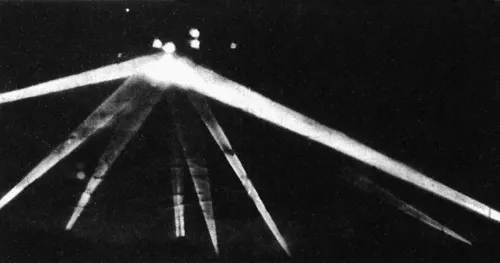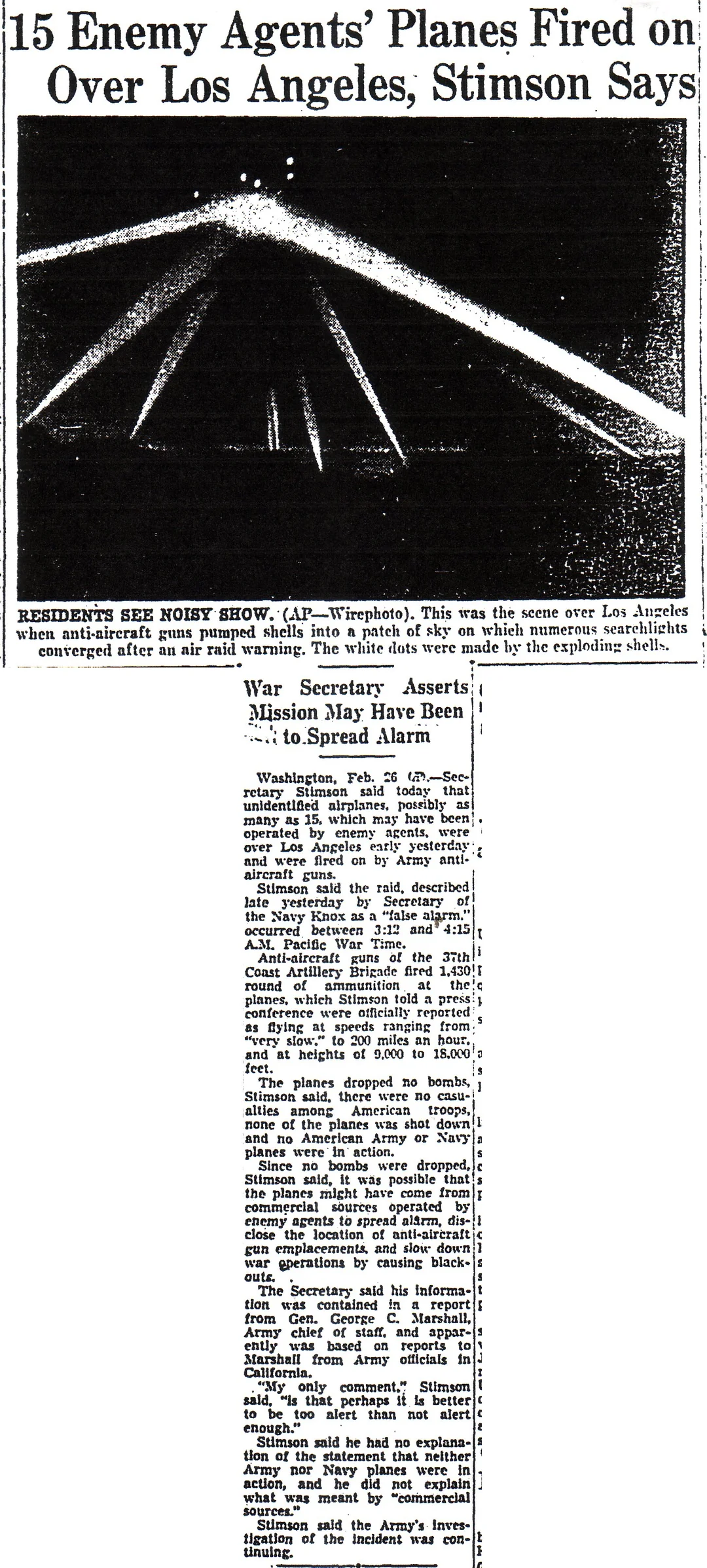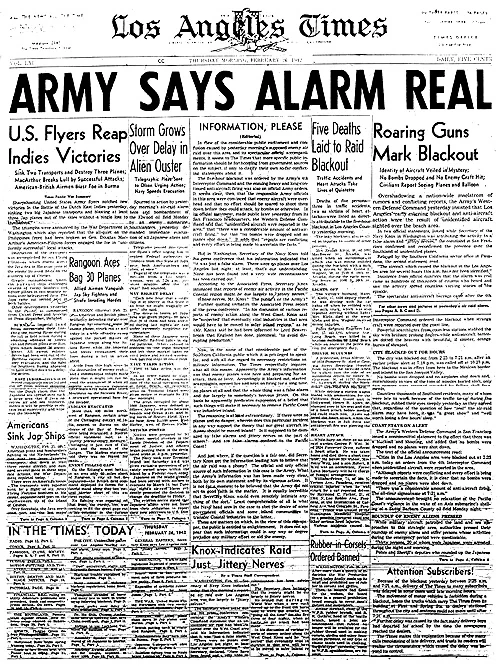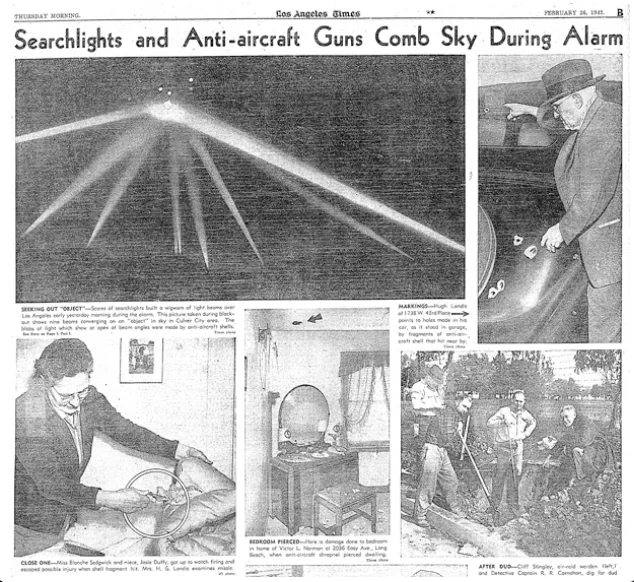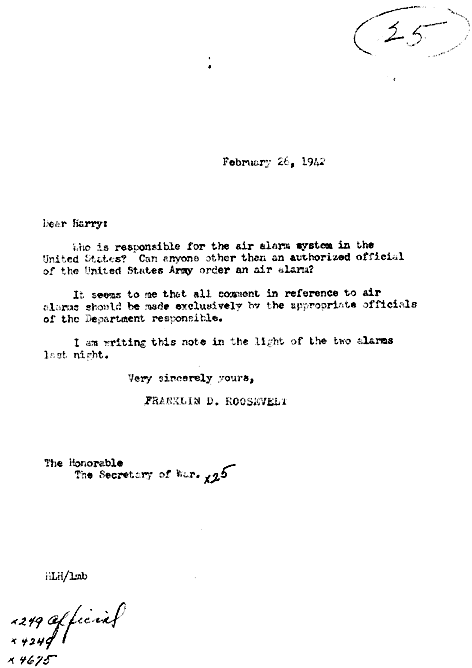
The Battle of Los Angeles occurred on the night of February 24–25, 1942, during World War II, when U.S. military forces in Los Angeles launched a massive anti-aircraft barrage—firing over 1,400 rounds—in response to a perceived Japanese air attack. Japanese government confirmed they did not fly planes over Los Angeles during the war. Although conspiracy theories persist—ranging from UFOs to secret enemy aircraft—historical evidence overwhelmingly supports the weather balloon explanation.
The Battle of Los Angeles occurred on the night of February 24–25, 1942, during World War II, when U.S. military forces in Los Angeles launched a massive anti-aircraft barrage—firing over 1,400 rounds—in response to a perceived Japanese air attack. The incident followed the February 23 shelling of the Ellwood oil field near Santa Barbara by the Japanese submarine I-17, which heightened fears of a mainland invasion.
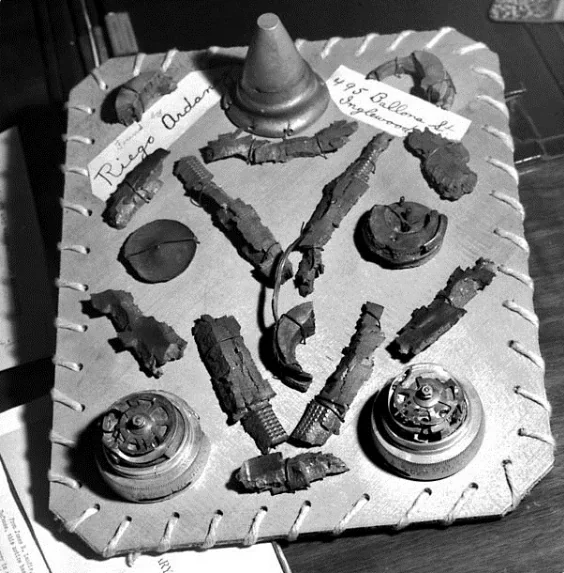
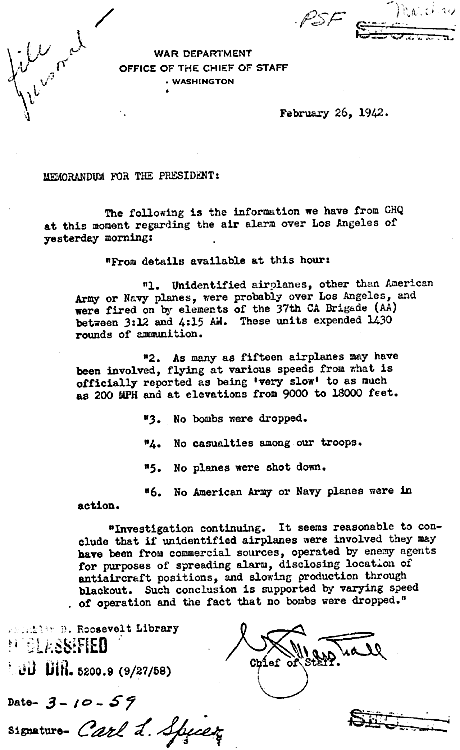
Despite the intensity of the response—searchlights sweeping the skies and anti-aircraft guns firing for over an hour—no enemy aircraft were ever confirmed, and the U.S. Navy later declared it a false alarm. The most widely accepted explanation, supported by post-war investigations including from the U.S. Office of Air Force History (1983) and the U.S. Coast Artillery Association (1949), is that meteorological weather balloons carrying flares were mistaken for enemy planes. The bright, moving lights from these balloons triggered the alert, and subsequent shell bursts illuminated by searchlights were misinterpreted as enemy aircraft.
Casualties: Five civilians died—three in traffic accidents during the chaos of the blackout and two from heart attacks due to stress. No bombs were dropped, and the damage was limited to shell fragments and structural damage. The event became known as the "Great Los Angeles Air Raid" or the "Battle of Los Angeles"—a nickname that reflected both the military’s overreaction and the public’s fear. The incident also contributed to the climate of suspicion that led to Executive Order 9066, authorizing the internment of Japanese Americans.
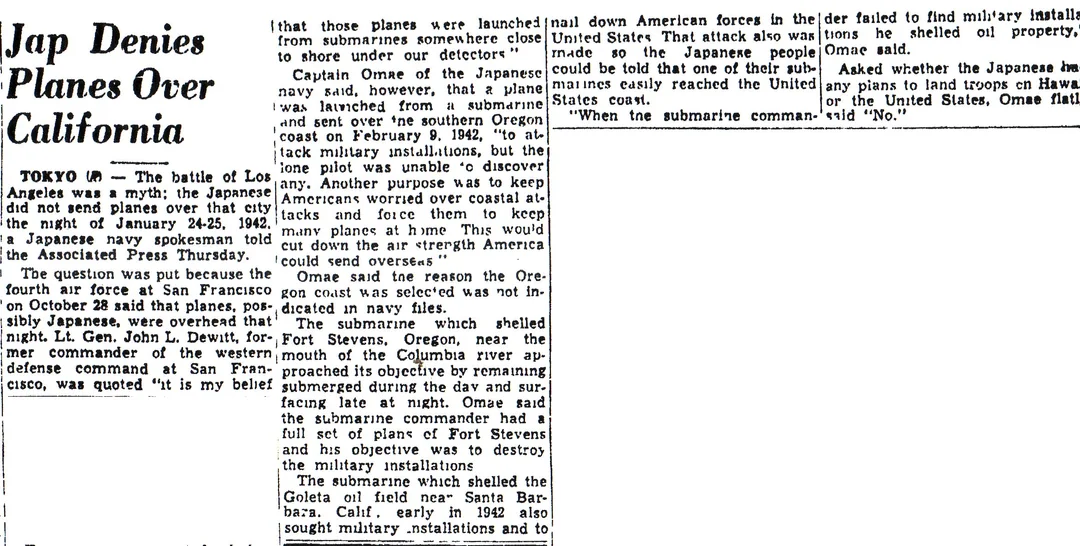
Japanese government confirmed they did not fly planes over Los Angeles during the war. Although conspiracy theories persist—ranging from UFOs to secret enemy aircraft—historical evidence overwhelmingly supports the weather balloon explanation.
Conspiracy
Reddit Post linking to an explanation of the conspiracy
Original Reports from military personnel taken from the 4th Anti-Aircraft Command history, Chapter V, "Defense Operations on the West Coast.
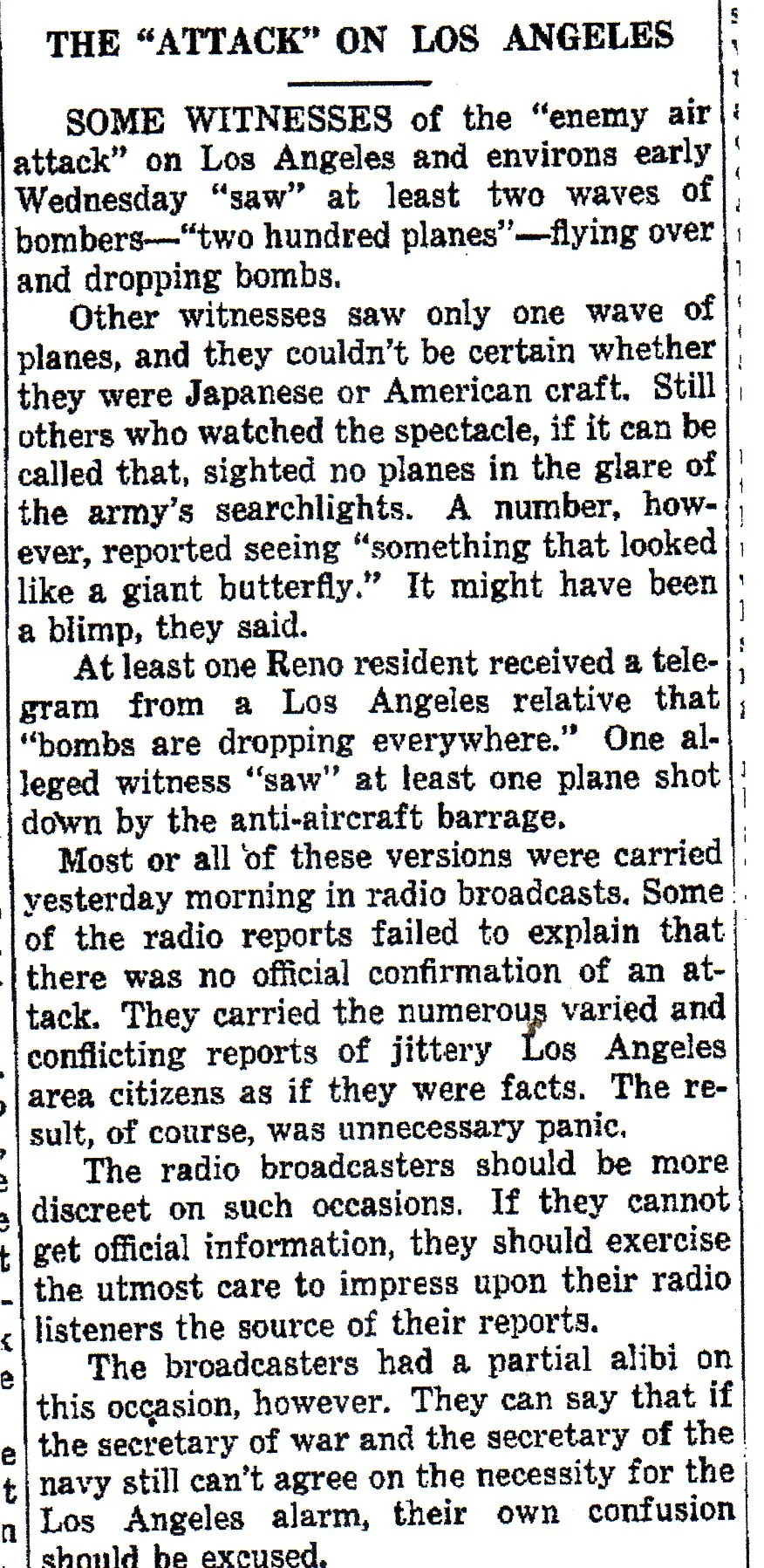
There were multiple eye witness statements that discuss the object that night from the military and civilians. E.g. Chief of Police of Long Beach, J. H. McClelland was up on the roof of the Long Beach Civic Center and claimed to witness planes coming inbound towards Redondo Beach. Peter Jenkins, a staff reporter from the Herald Examiner reported that he could clearly see a "V" formation of about 25 silvery planes flying slowly towards Long Beach.
Contextual Links
https://www.militarymuseum.org/BattleofLA.html
https://www.reddit.com/r/UF0/comments/ggv788/the_battle_of_los_angeles_1942/
https://www.cufon.org/pdf/BattleOfLosAngeles.pdf
Check images for more context and better understanding